Non-surgical Fat Decrease Coolsculpting, Kybella, Sculpsure, Ultrashape Abcs
Adipose Tissue Maintains An Epigenetic Memory Of Excessive Weight After Weight Reduction
MOFA presumed Factor 1 as the primary source of information variability between the problems, which was mostly influenced by energetic hPTMs (Fig. 3e). Whether your objective is to boost your general health or simply drop weight, burning excess fat can be difficult. Past diet plan and workout, many other factors can influence calorie burning and weight loss. The good news is, there are several straightforward methods to melt calories that you can execute.The feedback to these integrated signals is that hunger increases and the expense of power decreases. We have actually referred to this measurable distinction in between the calorie worth mirroring cravings and expenditure requirements as the energy gap (9-- 11). To keep the decreased weight, food consumption have to be cognitively (in humans) or forcefully (in pets) limited to the level that used up power is subdued. Throughout weight upkeep after weight management, this power void mirrors the magnitude of the everyday burden that thwarts cognitive initiatives to maintain the decreased weight.
In summary, it stays unsolved whether specific cells retain a metabolic memory and whether it is given with epigenetic devices. Iron is an important mineral with several important functions in the body.Iron deficiency can influence thyroid's health. The thyroid is a little gland in the neck responsible for producing hormones that manage metabolism.Research indicates that reduced iron degrees are connected to damaged thyroid feature and disruptions in thyroid hormonal agent manufacturing. Hypothyroidism is a condition where the thyroid gland doesn't generate enough thyroid hormones. Typical symptoms of hypothyroidism, or reduced thyroid feature, consist of tiredness, weakness, lack of breath, and weight gain.We guess that this may take place due to the fact that leptin, Tummy tuck alternatives and maybe insulin, degrees show both the amount of kept lipid and the dimension of the constituent adipocytes (87 ). Smaller sized adipocytes secrete much less leptin and cause reduced distributing levels for an offered fat mass. Smaller adipocytes are likewise extra insulin sensitive (45,46), which presumably suggests they call for reduced circulating degrees of insulin to give the very same metabolic control. The reduction in cell size and the loss of total fat mass, therefore, may add independently to the decline in leptin and insulin. If new, really small adipocytes are produced early in the relapse procedure, the influence of cell dimension can be compounded. No matter, the integrated adiposity signal conveyed to the mind is that the total power gets are low and that the adipocytes are far below their ultimate capacity to store power.
Is Thirdhand Smoke A Surprise Health Risk?
F, Genetics counts and the number of UMIs per designated cell type in the omAT examples from the MTSS (left) and LTSS (right) research study. G, Genetics counts and the variety of UMIs per assigned cell type in the scAT samples from the LTSS (left) and NEFA (right) research study. Raw gene and promoter/enhancer-specific peak count matrices were log-normalized utilizing the R plan lawn edger. PCA of the normalized matter matrices was done making use of the prcomp feature of R package statistics v. 3.6.2.
Outer signals produce an 'anabolic' neural account in the hypothalamus and hindbrain, increasing cravings and sending neuroendocrine efferent signals to improve metabolic effectiveness in peripheral tissues. Metabolic requirements decrease as a feature of (i) lost mass, (ii) lowered consumption of food and (iii) increased metabolic efficiency of peripheral tissues. Outer cells clear circulating nutrients more effectively and utilize gas much more successfully to produce the energy they need.What You Need To Learn About Juicing For Fat Burning

The mobile and metabolic adaptations in adipose tissues absolutely contribute to the undermined postprandial trips of flowing nutrients following fat burning. The repercussion to systemic metabolic process is that postprandial glucose excursions would be attenuated and the postprandial suppression of circulating FFAs would certainly be potentiated. To check out the molecular mechanisms and pathophysiological significance of this suppositional metabolic memory of obesity, we analyzed WL in an experimental animal version (Fig. 2a). The 6-week-old man computer mice were fed a high-fat diet regimen (HFD; 60% kcal from fat) or low-fat chow diet (10% kcal from fat) for 12 (H and C) or 25 weeks (HH and CC_l). Ultimately, we switched over the diet to a conventional chow diet regimen (HC, CC_s, HHC, CCC), resulting in weight normalization in 4-- 8 weeks (Fig. 2b, c).
- C, PCA of translatome (TRAP-- seq) of classified adipocytes from C, CC_s, CC_l, CCC, H, HH, HC and HHC.
- Both the SNS and thyroid hormonal agents have inhibitory effects on preadipocyte expansion and stimulatory results on preadipocyte differentiation.
- However, the worth of this theory is that it offers a fundamental explanation for the perseverance of the power gap driving weight regain in both static (throughout weight upkeep) and vibrant (during weight restore) phases of the regression to excessive weight.
- Leptin degrees in HCH mice went back to H mice degrees, whereas CCH mice did not show a considerable increase (Fig. 5f).
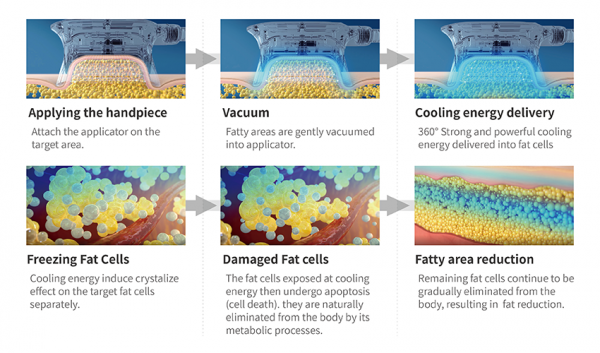
- Because skin, muscle and nerve tissue freeze at a lower temperature level than fat, these cells remain unharmed.
These monitorings supply a novel viewpoint of the convenience of adipocytes that was when unappreciated. Presently, few studies have actually taken into consideration such dramatic functional makeovers in the context of weight reduction, weight upkeep and weight reclaim studies. Offered the metabolic extremes that can occur with weight-loss and weight reclaim, it would be sensible for future researches to think about the extent to which adipocytes could be modified with power restriction and gross overfeeding.